
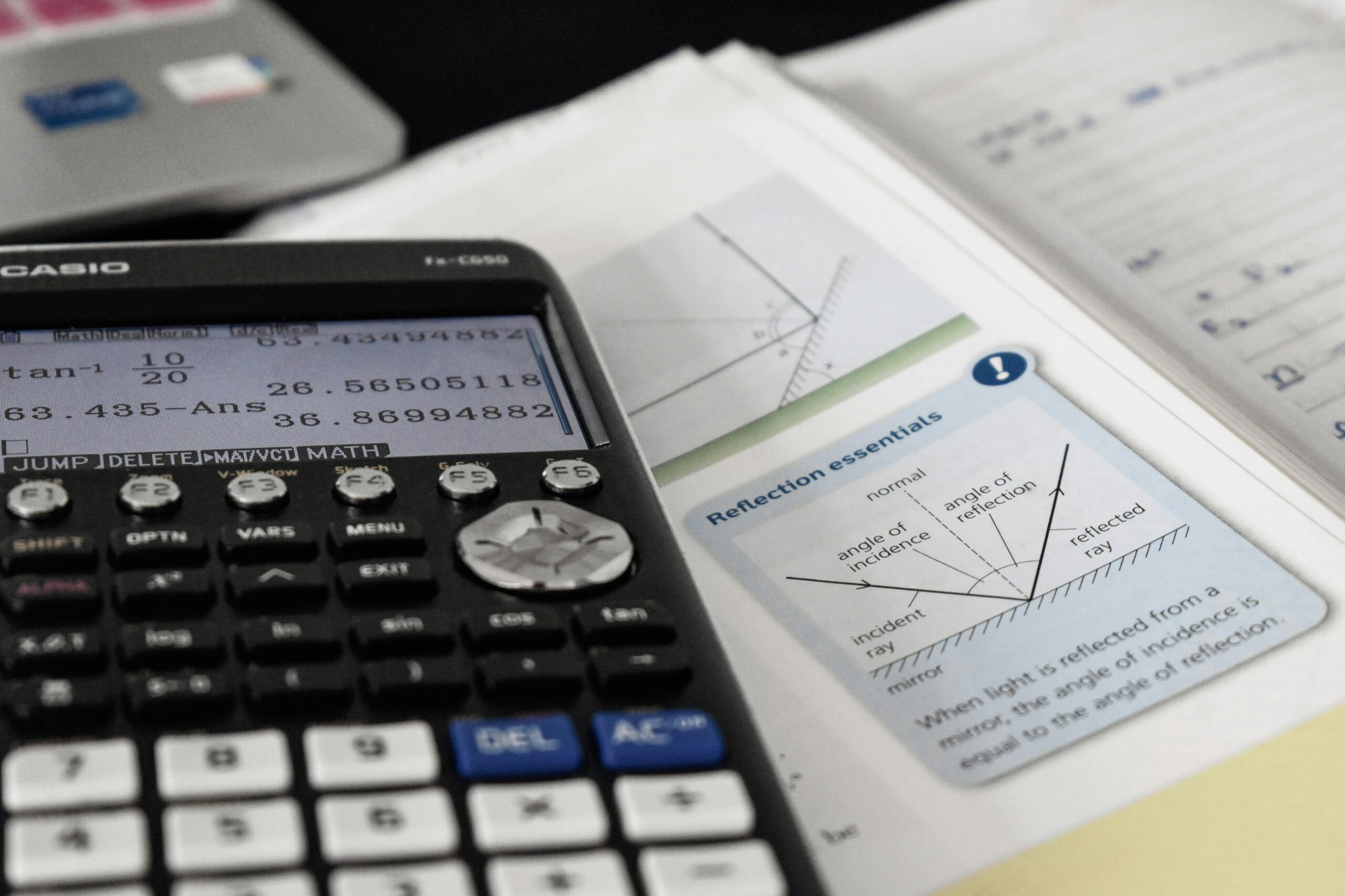
🎯 What a Grade 9 in GCSE Maths Really Requires
A Grade 9 doesn’t mean getting everything perfect.
It means:
- You understand the full syllabus
- You can apply methods to unfamiliar questions
- You avoid repeated, simple mistakes
At this level, it’s less about learning new content—and more about how well you apply what you already know.
Most students revise like this:
- Start with easy topics
- Avoid difficult ones
- Feel productive, but don’t improve much
The problem is simple:
👉 Your grade is limited by your weakest topics
If you consistently lose marks on things like:
- Algebraic fractions
- Circle theorems
- Graphs
That’s exactly where your focus should be.
Improvement comes from discomfort—not repetition of what you already know.
📄 Step 2: Use Past Papers Properly (Not Just for Practice)
Past papers are essential—but most students use them incorrectly.
They:
- Rush through questions
- Check answers quickly
- Move on
That doesn’t build skill.
A better approach:
- Take your time with each question
- When you get something wrong, identify exactly why
- Redo the same question a few days later
That final step is what actually improves your grade.
❗ Step 3: Fix Mistakes So They Don’t Happen Again
At higher grades, most lost marks come from:
- Misreading questions
- Rushing calculations
- Dropping negative signs
- Skipping steps
These aren’t knowledge gaps—they’re habits.
What to do:
- Keep track of mistakes
- Understand the cause
- Revisit them regularly
If you stop repeating mistakes, your grade improves quickly.
✍️ Step 4: Always Show Clear Working
Even if you can do maths in your head, don’t rely on it in exams.
Showing working:
- Helps you catch errors
- Earns method marks
- Makes your thinking clearer
It’s one of the easiest ways to pick up extra marks without learning anything new.
⏱️ Step 5: Learn How to Handle Difficult Questions
You will get stuck on some questions. That’s normal.
What matters is how you respond.
Spending too long on one question can cost you marks elsewhere.
Better strategy:
- Attempt it properly
- If it’s not working, move on
- Return later
A fresh look often makes a big difference.

🧩 Step 6: Focus on High-Frequency Topics
Some topics appear consistently in GCSE Maths exams:
- Algebra (equations, rearranging, sequences)
- Graphs
- Percentages
- Ratio
- Geometry
Being strong in these gives you a major advantage.
📝 A Simple GCSE Maths Revision Plan (That Actually Works)
You don’t need extreme hours—just consistency.
Example weekly plan:
- Day 1: Weak topic (learn + practice)
- Day 2: More questions on that topic
- Day 3: Mixed questions + review mistakes
- Day 4: New weak topic
- Day 5: Past paper practice
- Weekend: Review + redo mistakes
Even 1–2 hours per day is enough if it’s focused.
🔁 Consistency Beats Cramming
Last-minute revision might help slightly—but it won’t get you a Grade 9.
What works:
- Regular practice
- Revisiting topics
- Gradual improvement over time
Small, consistent effort beats occasional intense sessions.
❓ GCSE Maths Grade 9 – Frequently Asked Questions
How many hours should I revise for GCSE Maths?
1–2 hours a day of focused revision is usually enough if done consistently.
Are past papers enough to get a Grade 9?
Only if you properly review mistakes and understand them.
Can you go from a Grade 6 to a Grade 9?
Yes—but it requires focused work on weak areas and consistent practice over time.
Getting a Grade 9 in GCSE Maths isn’t about doing more—it’s about doing things better.
Focus on:
- Weak areas
- Proper practice
- Learning from mistakes
Do that consistently, and your grade will improve.
🚀 Want to Improve Faster?
If you’re aiming for a Grade 9 but not sure how to get there, we offer tutoring that focuses on:
- Breaking down difficult topics clearly
- Practising real exam questions
- Building confidence step by step
👉 Get in touch to start improving your GCSE Maths today.
Leave a Reply